A boiler is a closed-vessel heating appliance. It warms water and generates steam. It operates by using a fuel source (like natural gas or electricity) to heat water inside a combustion chamber.
In today’s article, we’ll talk about how a boiler works and what’s actually included in its repair. Let’s get started.
How a Boiler Works
First, the thermostat senses low room temperature. It tells the boiler to turn on. When the boiler starts, the fuel ignition unit burns gas or oil to create heat inside the combustion chamber. A heat exchanger then moves this thermal energy into the water.
Finally, the pump pushes the hot water or steam through hidden pipes. The cooled water goes back to be reheated.
Here it’s important to note that different types work differently. The hydronic boilers quietly pump hot water around your house and provide even heat. Steam boilers use natural pressure to push steam up through pipes. And the combi boiler connects directly to your main water supply. It heats the water on demand.
Primary Repair Tasks
While doing a boiler service, a plumber may perform a range of tasks based on the nature of the fault. For example, they may first use different tools to find error codes. They can also identify system issues that the tools can’t detect.
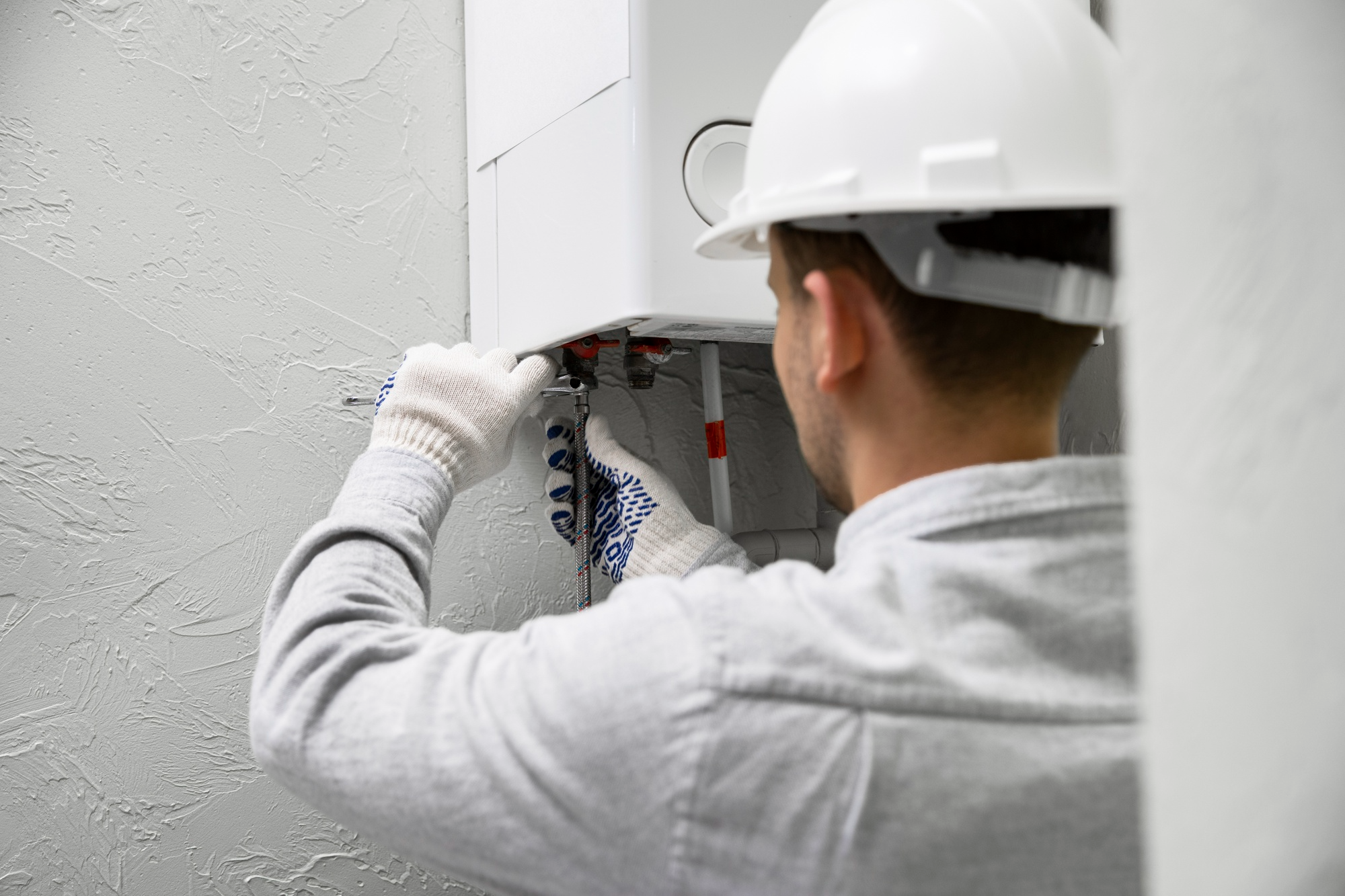
Another task is changing different components of a boiler, such as fans, valves, heat exchangers, or the entire broken pumps. A reliable plumber will always use high-quality parts, so they last longer.
Leak sealing is another task. Here, gas or water leaks are fixed in the internal pipework. If the pressure is uneven in the walls, the expansion vessels can also be adjusted.
Importance of Testing and Safety During Repair
Before starting any repair work, the plumber may test thermostats and emergency shut-off switches. Gas burning is also checked to ensure harmful carbon monoxide leaks don’t happen. A plumber may turn the boiler on to see if the radiators and taps heat up properly.
But why is the rigorous testing done?
The primary goal is to prevent deadly, life-threatening explosions. Equipment failure can also cost a lot to overcome, so preemptive testing ensures that those components don’t get excessive load and are only used when they can perform well.
Can Plumbers Conduct the Repair Job?
The tasks can’t be performed by any plumber. Only certified heating engineers or licensed HVAC specialists can perform the job. General plumbers CAN handle external radiator issues or water pipe connections, but you need specialized experts to safely fix the internal boiler components.
You also need to check how experienced they are in solving the exact problem you’re facing. Verify if they can handle your specific fuel type (gas, oil, or electric). You can also ask for past client references and verify them independently by calling them.
Final Thoughts
It’s important to conduct regular maintenance of the boiler so its components never fail. Delaying it can prove costly in so many ways.