

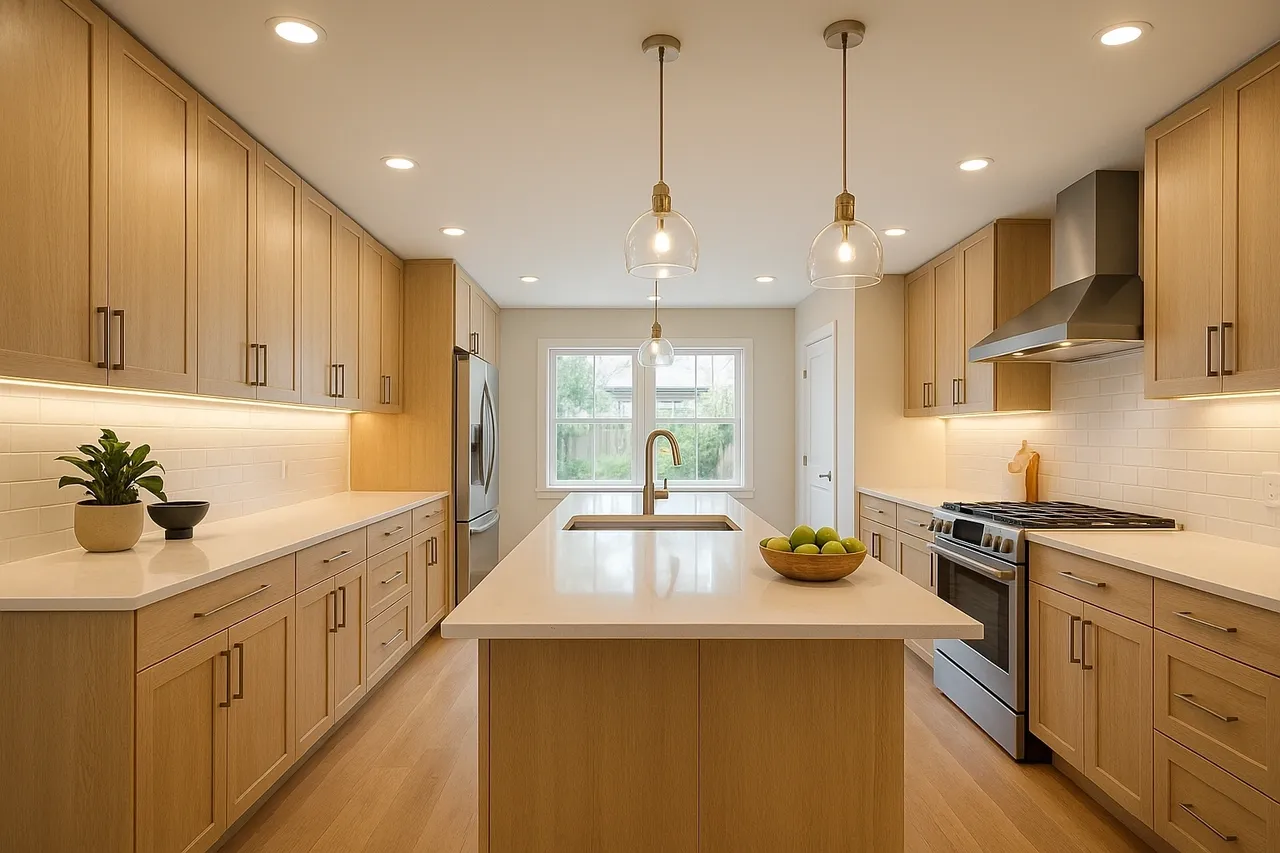
The kitchen is rarely used for one reason. From coffee-making in the morning and quiet preparation, to cooking and eating together at night, there are many things happening in the kitchen. To support various styles and moods, lighting plays a significant part. A single fixture on the ceiling can’t handle the task by itself.
A majority of people use layering lighting by using alternatives like pendants or ceiling lights to provide convenience and comfort. Lighting for kitchens by Visual Comfort is a fantastic source of inspiration. It shows how the best fixtures can completely transform the look of a kitchen. This article explains the different types of lighting that mix together to create a harmonious and cozy space.
Use Ambient Lighting As The Starting Point
Ambient lighting gives that massive bright wash, making your kitchen feel spacious and inviting. Think of this as the foundation of any other fixture you choose. Lighting fixtures for ceilings, recessed containers, or a great flush mount typically do this task. A well-designed ambient setting spreads light throughout the walls and floors.
It stops those dark spots from gaining traction and also makes the overall vibe more conducive to living your life. In most kitchens, soft and warm shades are the best option. They allow you to get a clear view of everything without that ugly, blinding glare that you can get from bulbs that aren’t worth the cost. Ambient base layers allow your beautiful decorative lights to shine without being faded.
Task Lighting For Useful Kitchen Activities
Task lights can be found right where the actual cooking and chopping take place. Sinks, countertops, and the stove need an extremely bright light source to be safe and efficient.
Typical Places for Task Lighting
- Countertops to chop and for food preparation
- Stove cooking areas that are visible
- Sinks are used for washing tasks
- Kitchen islands are used to prepare work
Lighting under cabinets is generally the most effective way to ensure proper lighting for your task. These tiny strips shine illumination on the stone or wood without causing uncomfortable shadows. Pendants that hang over the island are also helpful when cooking large meals. When you’ve got it right, the task layer will ensure that the daily chores in your kitchen are easy on the eyes.
Pendant Fixtures as a Declaration of Style
Pendants typically end up as the primary visual anchors in kitchens. You can see them hanging over breakfast bars, islands, or even in a small dining space.
Considerations for Pendant Design
- The size of the fixture in relation to the island
- The counter’s height should be placed above the counter
- Shade material and the finish
- Light tones that complement the decor surrounding it
Glass pendants feel very light and airy. Metal shades are a lot more hefty, with a more pronounced visual weight to their appearance. Traditional lantern shapes are ideal for the traditional home style, and simple, thin lines are more appealing in contemporary places. The best lighting fixtures combine the function of a decorator with effective lighting. They are a great source of character while also giving you the focused illumination you’re looking for.
Adjust the Brightness and Temperature of Light
A well-designed lighting scheme requires a mixture of the correct light intensity and temperature. If one light is blue, while another appears yellow, the entire kitchen feels a bit off and out of balance.
Advice for Well-Balanced Lighting
- Select warm white tones for a warm and welcoming environment
- Keep the same color temperature across all fixtures
- Dim the brightness as much as it is
- Avoid using extremely bright light bulbs in your decorative fixtures
Dimmers can be a game-changer at different periods during the day. It’s best to have it bright when cutting veggies, but soft for quiet meals. Maintaining the brightness and tone levels constant will make the different fixtures feel as if they are part of the same.
Harmony Is Created by Fixture Placement
Where you place the lights is as crucial as the lights themselves. Even the most stylish lamp can look terrible if it’s placed in a strange location. Recessed lamps are usually arranged in an even, straight pattern on the ceiling. Pendants that are over an island should be spaced equally so that they appear well-balanced to the eye.
Under-cabinet lighting strips should be affixed throughout the entire counter space. If you consider the placement first, you can ensure that every light source assists the other ones. Ambient lighting handles the most heavy lifting, task lights are aimed at areas for work, and accent lighting showcases the style. If you examine Kitchen lighting designed by Visual Comfort, for instance, it is clear the way that clever placement and various fixtures create a space that is beautiful, but also practical.
The best way to get a kitchen lighting arrangement to work typically requires the use of a few layers. The ambient lights will give the room a warm glow while the task lights assist you in performing your work. Accents are used to add the illusion of depth, and pendants provide that added design to the island. Being aware of how bright things are and how they are placed keeps the entire space in harmony. When you map these things to be done, your kitchen transforms into a practical, warm, and cozy space that’s prepared to handle anything.